Posted in agriculture, donkey

All about the Donkey

By Elizabeth Prata

Studying the natural history of the Bible is a good thing to do. Plants, places, and animals are constantly mentioned in God’s Word. Processes such as wine-making and agricultural endeavors like threshing and irrigating are mentioned too. Knowing what the references mean helps deepen our understanding of such verses when we study them. For example in Psalm 21:1, it is stated,

The king’s heart is a stream of water in the hand of the LORD; he turns it wherever he will.

This is a vivid metaphor that anyone can understand. But knowing that in ancient times and even today, Egyptian farmers by the Nile dig complicated channels in the earth and board the source of each one, and by lifting a certain board at any given time they could precisely direct the channel to a row of crops as they will. Now you have an even more clear picture of the metaphor. (More here)

Or this regarding passing under the rod. In Ezekiel 20:37 it says,

And I will cause you to pass under the rod, and I will bring you into the bond of the covenant:

which Jamieson/Fausset/Brown’s Commentary says,

pass under the rod—metaphor from a shepherd who makes his sheep pass under his rod in counting them (Le 27:32; Jer 33:13).

As the shepherd bunked down nightly, he would count each sheep to ensure they were all collected. As each one passed under his rod entering the sheepfold he would count them. Knowing these things could develop into a deeper study of agricultural practices in order to provide background context for scripture study, or simply knowing a little bit about what the rod or the channels of water helps provide  a better understanding of the verse.

EPrata photo

There are many animals in the Bible either used in fact or referred to as symbols (like the ant in Proverbs 6:6). Donkeys are an animal mentioned frequently and used as beasts of burden to carry goods or people.

So Abraham rose early in the morning, saddled his donkey, and took two of his young men with him, and his son Isaac. And he cut the wood for the burnt offering and arose and went to the place of which God had told him. (Genesis 22:3)

Donkeys were part of the Law.

If you meet your enemy’s ox or his donkey going astray, you shall bring it back to him. (Exodus 23:4)

There are some famous donkeys in the Bible. Balaam’s donkey for example, spoke. Or was it God speaking through the beast?

EPrata photo

Jesus’ Triumphal entry was on the back of a donkey. John 12:14 records,

And Jesus found a young donkey and sat on it, just as it is written, “Fear not, daughter of Zion; behold, your king is coming, sitting on a donkey’s colt!”

Initially, people who could afford them rode donkeys, such as Judges. (Judges 5:10). After that time, though, horses were imported, and high officials enjoyed riding white horses more than donkeys so they left the donkeys to the poorer folk. When Jesus rode in to Jerusalem on a donkey it was demonstrating his humility and meekness.

Donkeys were a beast of burden used frequently as the preferred animal because they were stoic and patient, and tended to panic less easily than horses. Physically,

Donkeys’ feet have a number of differences, including being more elastic, narrower in shape, and more upright than a horse’s. Donkeys can be prone to developing very long hooves as they do not chip and breakaway as a horse’s would do. The donkey’s digestive system is considerably more efficient than that of a similar sized pony. … Donkeys in general have a very efficient walking pace and to be honest, in most situations it is easier to walk at the donkeys pace rather than try and make them go at ours.  (source)

A boy and his donkey. This is in the town of Papallacta, high in the Andes. The type of saddle has been in use since Incan times. EPrata photo

Rejoice greatly, O daughter of Zion; shout, O daughter of Jerusalem: behold, thy King cometh unto thee: he is just, and having salvation; lowly, and riding upon an ass, and upon a colt the foal of an ass. (Zechariah 9:9).

PS: There is actually no Bible verse that says Mary rode a donkey on her way to Bethlehem with Joseph. More on that in an upcoming blog!

Further Reading

Bible topics: The Domestic Ass.

Posted in agriculture, donkey

Bible topic: the Donkey

Studying the natural history of the Bible is a good thing to do. Plants, places, and animals are constantly mentioned in God’s Word. Processes such as wine-making and agricultural endeavors like threshing and irrigating are mentioned too. Knowing what the references mean helps deepen our understanding of such verses when we study them. For example in Psalm 21:1, it is stated

The king’s heart is a stream of water in the hand of the LORD; he turns it wherever he will.

This is a vivid metaphor that anyone can understand. But knowing that in ancient times and even today, Egyptian farmers by the Nile dig complicated channels in the earth and board the source of each one, and by lifting a certain board at any given time they could precisely direct the channel to a row of crops as they will. Now you have an even more clear picture of the metaphor. (More here)

Or this regarding passing under the rod. In Ezekiel 20:37 it says,

And I will cause you to pass under the rod, and I will bring you into the bond of the covenant:

which Jamieson/Fausset/Brown’s Commentary says,

pass under the rod—metaphor from a shepherd who makes his sheep pass under his rod in counting them (Le 27:32; Jer 33:13). Whether you will or not, ye shall be counted as Mine

As the shepherd bunked down nightly, he would count each sheep to ensure they were all collected. As each one passed under his rod entering the sheepfold he would count them. Knowing these things could develop into a deeper study of agricultural practices in order to provide background context for scripture study, or simply knowing a little bit about what the rod or the channels of water helps provide  a better understanding of the verse.

There are many animals in the Bible either used in fact or referred to as symbols (like the ant in Proverbs 6:6). Donkeys are an animal mentioned frequently and used as beasts of burden to carry goods or people.

So Abraham rose early in the morning, saddled his donkey, and took two of his young men with him, and his son Isaac. And he cut the wood for the burnt offering and arose and went to the place of which God had told him. (Genesis 22:3)

Donkeys were part of the Law.

If you meet your enemy’s ox or his donkey going astray, you shall bring it back to him. (Exodus 23:4)

There are some famous donkeys in the Bible. Balaam’s donkey for example, spoke. Or was it God speaking through the beast?

Jesus’ Triumphal entry was on the back of a donkey. John 12:14 records,

And Jesus found a young donkey and sat on it, just as it is written, “Fear not, daughter of Zion; behold, your king is coming, sitting on a donkey’s colt!”

Initially, people who could afford them rode donkeys, such as Judges. (Judges 5:10). After that time, though, horses were imported, and high officials enjoyed riding white horses more than donkeys so they left the donkeys to the poorer folk. When Jesus rode in to Jerusalem on a donkey it was demonstrating his humility and meekness.

Donkeys were a beast of burden used frequently as the preferred animal because they were stoic and patient, and tended to panic less easily than horses. Physically,

Donkeys’ feet have a number of differences, including being more elastic, narrower in shape, and more upright than a horse’s. Donkeys can be prone to developing very long hooves as they do not chip and breakaway as a horse’s would do. The donkey’s digestive system is considerably more efficient than that of a similar sized pony. … Donkeys in general have a very efficient walking pace and to be honest, in most situations it is easier to walk at the donkeys pace rather than try and make them go at ours.  (source)

A boy and his donkey. This is Papallacta, high in the Andes.
The type of saddle has been in use since Inca times. EPrata photo

Rejoice greatly, O daughter of Zion; shout, O daughter of Jerusalem: behold, thy King cometh unto thee: he is just, and having salvation; lowly, and riding upon an ass, and upon a colt the foal of an ass. (Zechariah 9:9)

Bible topics: The Domestic Ass.

Posted in agriculture, bacteria, canker, end time, florida citrus, prophecy

What is happening to the world’s agricultural industry? Pests, weather, and losses bring us to the brink of famine

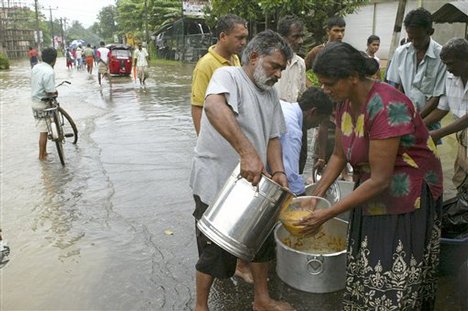
What is happening to the global agricultural industry? We know that the terrible winter has taken a devastating toll on crops all over the world, but it has also taken its toll on acreage. In Sri Lanka, “this month’s floods washed away swathes of agricultural lands, taking away livelihoods of thousands of people.” The situation report for the week ending January 13 states, “A total of 967,115 persons have been affected, with 18 deaths, two missing and 49 injured as of 12 January. A total of 195,919 persons are displaced in 493 temporary relocation centers in eight districts.” According to the Asia Tribune, “the floods have inundated 200,000 acres of paddy lands in the 5 major paddy cultivation districts and it is estimated that rice harvest in the next season may go down by over 360,000 tons which could precipitate a food shortages in the country in the coming months.”

Australia lost fields the size of Egypt in this current flooding season. Thousands of acres of ripe farmland have been lost, not to mention cattle and crops. On the other side of the world, “Parts of northern China are seeing their harshest winter in decades, with Beijing this month receiving its heaviest one-day snowfall in 59 years. Also Monday, Mongolia’s Minister of Foreign Affairs and Trade Zandanshatar Gombojav said most rural provinces in the poor, landlocked country sandwiched between China and Russia were covered by up to 20 inches (50 centimeters) of snow. He said nearly 800,000 animals had been lost while many transport routes were blocked by heavy snow.”

Almost a million cattle, lost? That hurts.

Florida’s non-citrus crop losses from cold could total $370M
“Green bean prices have tripled in North Florida. Mustard greens are hard to find at any price. Cabbage is now going for 69 cents a pound, way more than the three-pounds-for-$1 usually available in January. The hikes in fresh vegetable prices are the most obvious signs for many Floridians that the exceptionally cold weather this winter has taken a big bite out of the produce supply chain. The Florida Department of Agriculture and Consumer Services has estimated 2.5 million cartons or cases of fruits and vegetables were lost during December — not including processed citrus. Officials said another 4 million cartons of produce are expected to be lost before the end of March. Those losses translate into more than $150 million of lost cash sales so far, according to agriculture department spokesman Sterling Ivey.”

It is evident just from those few excerpts that the extreme weather has taken a serious toll on the agricultural industries around the world. Though all farmers expect weather-related setbacks, the deep losses and difficulties of weather struggles of record-setting events will be nearly impossible to recover from. We’re talking millions upon millions of lost revenue, millions and millions of pounds of food, and that is not something the world recovers from easily, even if we were promised the best of conditions in the near term. And the conditions are absolutely going to get worse in the near term, that is a biblical promise. So you see where this is going.

But another kind of impact besides weather is also taking its toll on agriculture. Strange plant pestilences and diseases are cropping up all over the world, many of which ave never been seen before. These plant diseases are stumping scientists as to a remedy.

In New Zealand a new Disease Threatens New Zealand Kiwi Industry
“At ground level, a typed notice warns people not to enter the orchard since the discovery of a destructive canker, found in New Zealand for the first time last Monday. What the notice does not say is that pseudomonas syringae pv actinidae, usually known as PSA, has the country’s kiwi industry, worth 1.5 billion New Zealand dollars, or $1.2 billion, in a crisis mode.”

Monsters & Critics reported about “the potential impact of a vine disease never seen before in the country.”

Speaking of bacterial canker “never before seen”, the same thing is happening in Oregon in the US, but this time with wheat:
Investigators baffled as wheat fields wither
The wheat mystery of Umatilla and Morrow counties
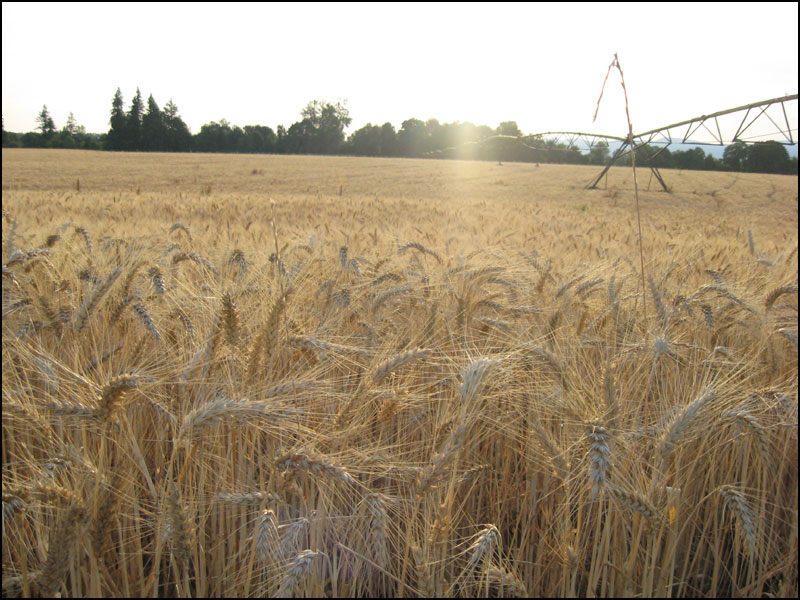
“The Oregon Department of Agriculture and Oregon State University are investigating the yellowing of upward of 40,000 acres of wheat in Umatilla and Morrow counties. So far, the cause is a mystery, and researchers do not know if the problems in the two counties are related. In early November, Umatilla County growers noticed wheat fields turning yellow and dying, OSU Extension soil scientist Don Wysocki said. Sixteen fields from three to 10 miles northwest of Pendleton were affected, Wysocki said. OSU Morrow County Extension associate professor Larry Lutcher said 30,000 to 40,000 acres of wheat in his county have plants with yellow or purple tips. The discoloration spreads inward and downward on the leaf. In some cases, plants are completely desiccated and will not recover.”

And…speaking again of an incurable bacteria killing the crops and the plants and trees on which they grow, it is happening in Florida, as reported January 20, 2011:

Incurable bacteria poses threat to citrus trees
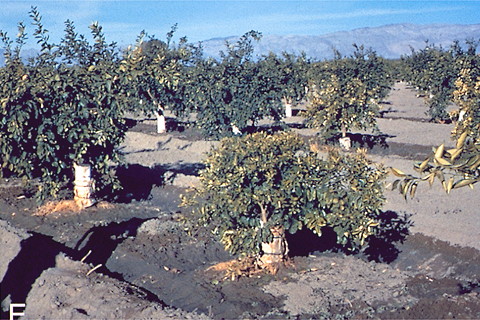
“While Florida farmers have lost some of their crop to cold weather for the second year in a row, they say a fast-spreading, incurable bacteria presents a greater threat to their trees and the citrus industry. Citrus greening has destroyed groves in the U.S., Brazil, Asia and Africa. Detected in Florida in 2005, it leaves fruit sour, malformed and unusable. Eventually, it kills the tree. The disease has been particularly devastating because it takes years for citrus trees to reach peak production, and the disease targets young trees, making it difficult for growers to replace those that have been lost. “It’s probably one of the biggest negative impacts in Florida today, short of the housing collapse,” said Louis Schacht, a Vero Beach farmer whose family has grown oranges for 60 years.”

I emphasize that weather and pests are part of the normal hazards for farmers. However, the range, scope, and pure mystery of these events coming at so close a time to each other is what bears looking into. And I was struck by the similar language in these two agricultural press releases this week:

CBP Stops Agricultural Pest at Nogales Port 
A U.S. Customs and Border Protection agriculture specialist discovered a potentially dangerous insect on fresh citrus leaves being brought into the U.S. from Mexico on Jan. 4, according to a CBP spokesman.
Brian Levin said the insect discovery was the first of its kind at the Mariposa Port of Entry near Nogales.

Destructive beetle unheard of in U.S. nabbed at San Diego Port
A beetle spotted by a sharp-eyed agriculture specialist at the Port of San Diego early this month turned out to be a highly destructive pest never before seen in the United States, federal officials reported Friday. On Jan. 3, the inspector discovered the tan-and-black insect lurking in a load of bananas in a maritime shipping container from Peru…

Do you get the idea that this is a losing battle? It is. Agriculture will wither all across the globe before too much longer. Accept Jesus as your Lord and ask him to forgive your sins and then He will do your battles for you!
http://platform.twitter.com/widgets.js