Here are some practical ideas on HOW to love as Jesus would have us love. Love these days is in short supply in the world. Our love will shine brightly if we love as Christians- loving our brethren, our families, the pagans, and even our enemies.
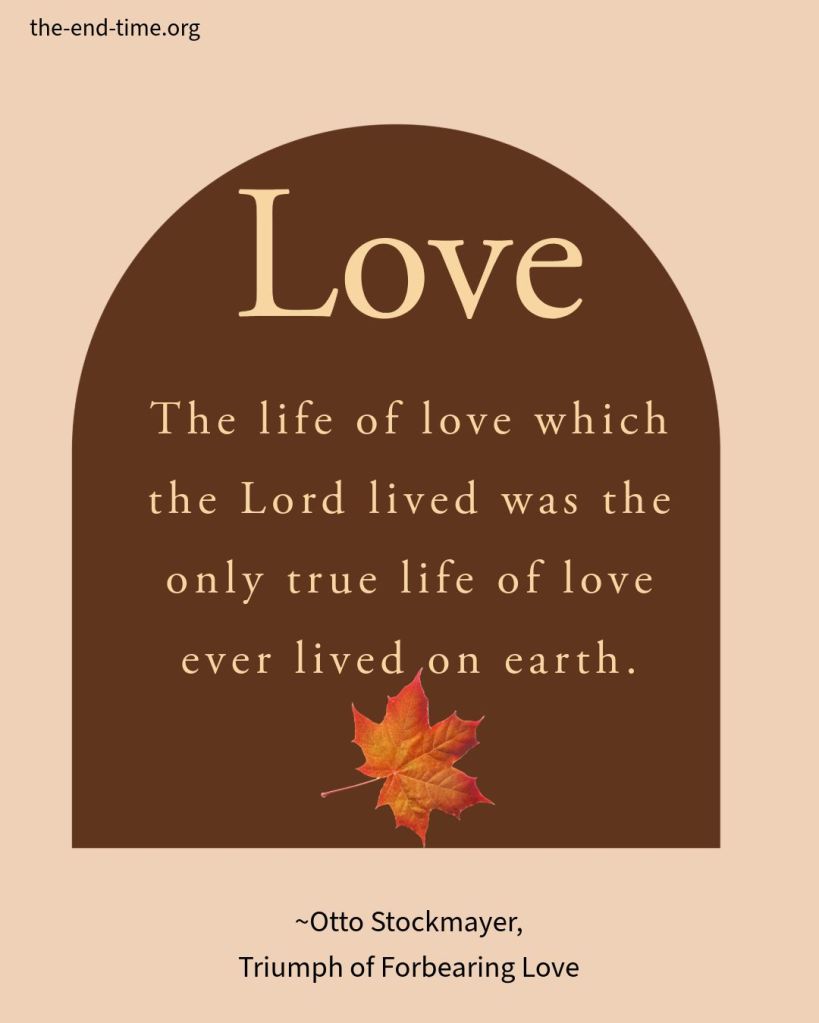
Extended quote from Free Grace Broadcaster #159, Love, from Chapel Library: essay The Triumph of Forbearing Love by Otto Stockmayer,
“Let us stop and consider the form of the expression. Of course, so far as we are children of God, Christ is in us. We cannot be born of God without having Christ in us. Christ must indeed be formed in us (Gal 4:19), but at the very moment we are born again from above He is in us.
Might it not be a very practical test, and a Biblical and Scriptural way of proving that Christ is in us, to get into the holy habit of always seeing Christ in our brother? Even if he were born again but yesterday, or only an hour ago, it is well for us at the very beginning of his Christian life to see in him, through faith, Christ abiding in his heart by the Spirit of God; a being of whom God—Father, Son, and Holy Spirit—has taken possession.
Let us learn to look at our brother as seeing in him the unseen Christ, and we shall help him in a mighty way to take heed that Christ may shine in his life. By this means he will become conscious of the holy ground on which he stands and moves and walks, by having become a Christian. We who have for years walked with Christ must help the babe, the child, to awake to his high calling as quickly as possible.
By recognizing Christ in him, we shall help him to become conscious of the wonderful secret of his new life; and we must prove ourselves to be men in Christ by not stopping short at what we see with our eyes and hear with our ears of the manifestations of the flesh which we may find in the young Christian. We must be able, through Divine love shed abroad in our hearts and free grace in our lives, to look beyond what is seen; we must love our brother through faith in God, that He may bring out the new creation in him in a beautiful way… more beautiful, it may be, than in our own lives.”
I have always loved paper. I’m a writer, to comes with the territory! Especially since I spent half my life expressing myself on paper before computer screens were invented. When I was in Italy, I purposely made a trip to the town of Fabriano. That place is one of the earliest and most important places in the West that sparked the trade in paper. The tradesmen there in the 1200s invented vats with multiple hammers, shortening the pounding time necessary to grind fiber to a malleable state. They also invented the watermark.
With a love of paper naturally comes a love of journals. I recently discovered the paper-journal-site Archer & Olive. This is an upscale, super-beautifully designed journal site. Their mission statement says,
At Archer & Olive, we believe creativity and planning should feel inspiring not overwhelming. That’s why we create premium journaling tools designed to support your mental wellness and help you stay organized in a way that feels joyful.
Archer & Olive’s Stamp Collector Collection
Premium is right. They make stunningly beautiful designs for their journals, notebooks, washi tape, and so on. An especially exciting product is their Subscription box. Inside are a myriad of freshly designed items sent to the subscriber. Each box bundle, and each season’s release of new individual collections, is freshly and uniquely designed by the talent behind the scenes.
For subscribers, the anticipation quickens as the date nears for the quarterly subscription box’s contents to be previewed and then released to the subscribers. They sell out quickly, I understand, and no wonder. They are beautiful as well as practical for the journaler or crafter who likes to create art in such notebooks.
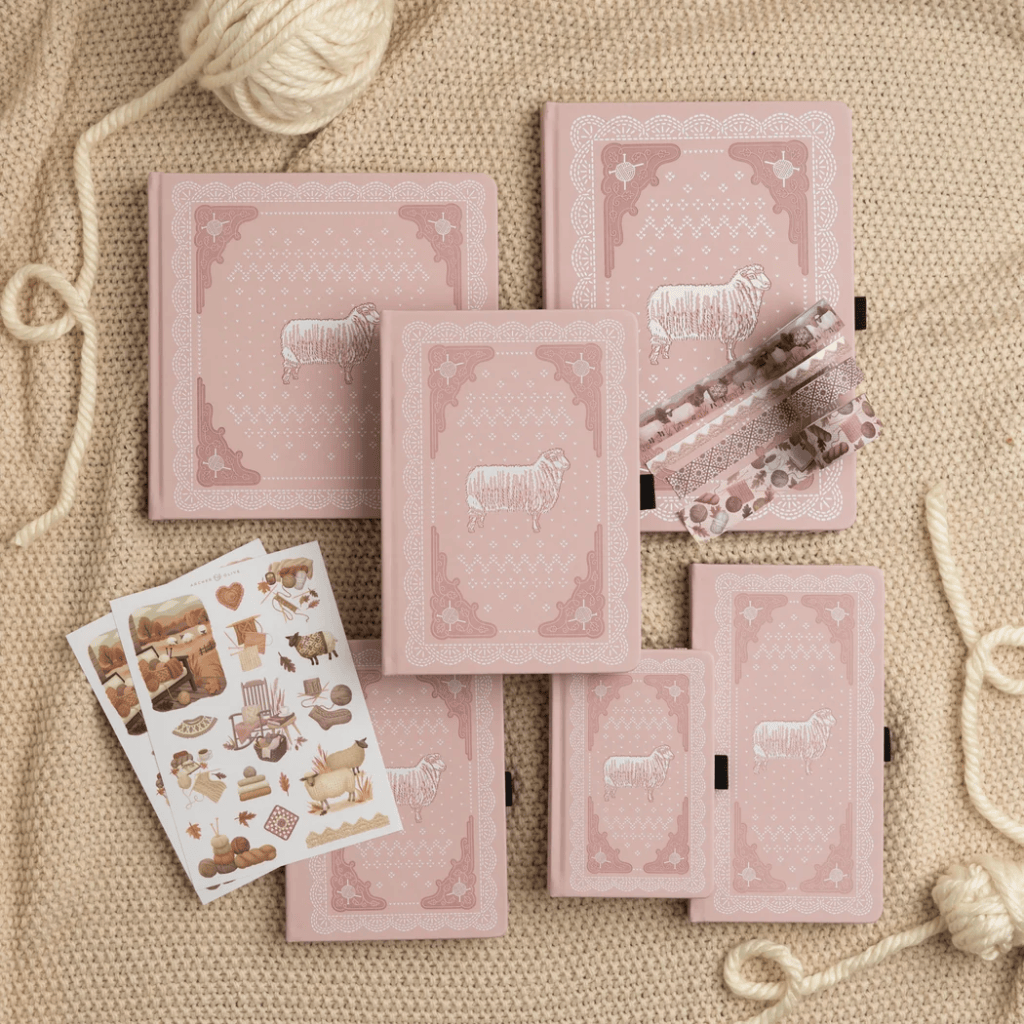
Archer & Olive’s Homespun Collection
Last week, on September 1, the Subscriber box was released to current subscribers, and a few days later, the opportunity for new quarterly subscribers to buy one was opened on their site.
I enjoyed seeing the glimpses and previews of the new designs, as well as viewing old “unboxings” on Youtube. These designers really know their craft.
Yesterday I read a statement from Archer & Olive that saddened me. Now, the state of social media is known to one and all. You can carve out a quiet corner for yourself by making intentional follows and relentless blocking… but still, the negativity, trolling, and downright hate will be present even when you make innocuous statements or put out a benign vibe. And so it was with A&O. They wrote:
In the past week, we have been getting an unprecedented number of comments questioning our design process. We will be honest, we were taken by surprise by the sudden influx. Our team have a longstanding history of gorgeous designs, long before generative Al developed to where it is now, and we naively believed those years of designs spoke for themselves. However, as more new people find us, we understand that we haven’t built your trust yet, so here’s what we’re doing going forward.
MAKING OUR STANCE CLEAR
Our team quickly put together this page to clearly state our stance against Al-art, as well as including some insights on our design processwe have shared before:
This page is not comprehensive, but we wanted to respond quickly to show we are actively engaged in the discussion, and working on ways to make our stance clear.
WHAT WE WILL BE DOING GOING FORWARD?
We have plans to continue to share more behind the scenes, and we are talking to our artists about sharing more of their process. However, we hope that everyone can understand that we will first and foremost be prioritizing the privacy and mental health of our staff. All our artists are in-house employees, and after being met with hostility when personally engaging with comments, many have become hesitant to have a public presence.
We do genuinely understand the vigilance when looking for Al, but our designs are created by real humans; real people who are seeing the unfounded comments and increased negativity towards their work. If you see an error, there was a real person behind that error. Our team are amazing, many who have been with us from the early days of Archer and Olive, and some newer faces who have allowed us to expand our designs and style over the years. We only hope going forward their work can be met with the praise it deserves.
How bad does society need to be that floods an innocent design site with trolls spewing hate! So sad. Here they are, making beautiful things, selling them, enjoying their own products, wanting to help people through journaling, and along come a flood of negative nellies who are skeptical that real, live designers have toiled hard to bring these pretty items to the public. Real, live designers whose work is not only not acknowledged positively, but denied at all!
How unkind.
You know that photo of all the men saluting Hitler in the Nazi salute and one guy rebelliously has his arms crossed?
In these days of unkindness, we can be that guy. Being kind in an unkind world will stand out. It will be a balm, a breath of fresh air, a sweet zephyr of repose for those around you.
To fellow Christians, Be kind to one another, compassionate, forgiving each other, just as God in Christ also has forgiven you. (Ephesians 4:32).
Therefore, as the elect of God, holy and beloved, clothe yourselves with hearts of compassion, kindness, humility, gentleness, and patience. (Colossians 3:12).
Kindness is a spiritual fruit. But the fruit of the Spirit is love, joy, peace, patience, kindness, goodness, faithfulness (Galatians 5:22).
As in like manner, kindness will also stand out in a darkening world in our attitudes and behavior toward non-Christians, too.
So then, while we have opportunity, let’s do good to all people, and especially to those who are of the household of the faith. (Galatians 6:10).
Even to those who are enemies! We should be kind. Luke 6:35 says, But love your enemies and do good, and lend, expecting nothing in return; and your reward will be great, and you will be sons of the Most High; for He Himself is kind to ungrateful and evil people.
It profits no one anything to be unkind. I know I have failed myself in this regard many times. I begin each day with an appeal to the Holy Spirit to help me be kind to one and all. Fading energy, irritation, illness, are some reasons why I fail to restrain the unkindness and it comes out. But to purposely troll a business with floods of unkind negativity is beyond appropriate.
Stand out by being kind, even in the face of unkindness. Paul quoted Proverbs 25:21–22 in Romans 12:20 (ESV), To the contrary, “if your enemy is hungry, feed him; if he is thirsty, give him something to drink; for by so doing you will heap burning coals on his head.” As GotQuestions explains,
Verse 21 explains the idea of heaping burning coals on someone by saying, “Do not be overcome by evil, but overcome evil with good.” Anyone can return evil for evil. But when a Christian does so, the watching world sees nothing different about our lives. It is not even clear who is right and who is wrong when we respond in kind to the one who wronged us. But, when we follow Jesus’ instruction to love our enemies (Matthew 5:43–44) and return good for evil, the contrast is stark. Our kind and gentle reaction to hatred spotlights the depravity of the one who treated us poorly and leaves the hurtful person alone in his or her hatefulness. Nothing pricks the conscience of a hateful person like a soft, forgiving spirit in the one he has wronged (Proverbs 15:1).
City Lights Books in San Francisco was the epicenter for the Beat Generation of the 1950s and helped spark the cultural earthquake that was the hippie movement of the ’60s. EPrata photo
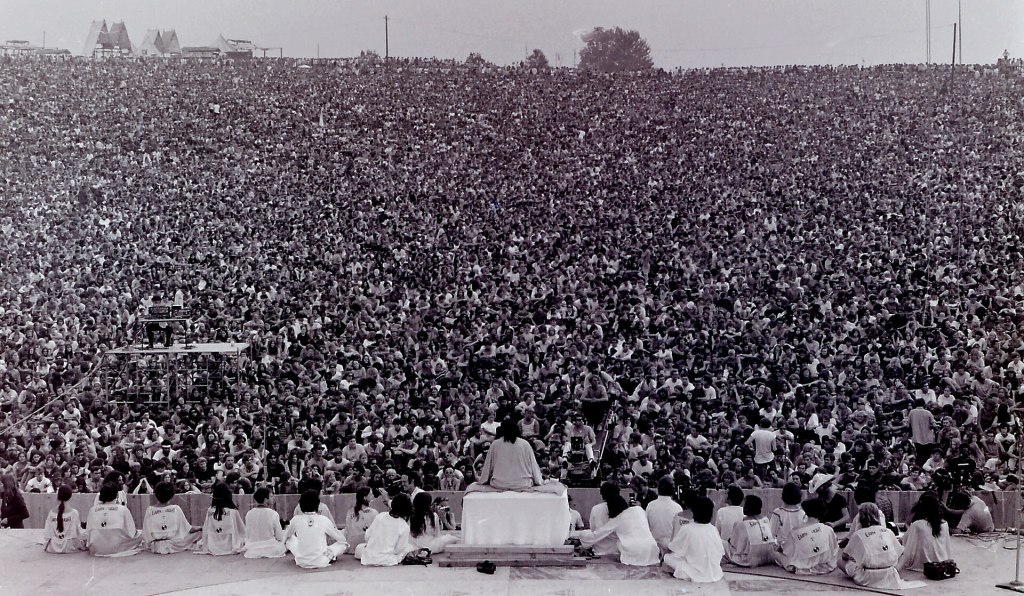
It happened 59 years ago. It was summer, flower children ‘hippies’ were on the rise, the Viet Nam war had become full blown, and an entire subculture was born. It was dubbed the “Summer of Love”.
The generation born Post-WWII in the late 1940s and 1950s and their parents experienced economic prosperity, technological advances, and a feeling of hopefulness since the dark World War was ended.
As with any culture, the hopefulness evaporated as the Cold War entered. The cultural highs went to lows. Nuclear fears, Russia fears, and general feelings of concern with what rapid consumerism and technology was doing to the country sparked the now teenage and young adult Baby Boomer generation to “question authority” and reject the old way of living.
Then the Viet Nam war happened, and with it, the fairly new technology called television, showing its satellite images from jungles of death halfway around the world now added to the generation’s discontent. The newsman Walter Cronkite intoning at the end of every nightly newscast the number of dead and injured in the war added to the prevailing mood of uneasiness.
Cronkite, America’s ‘most trustworthy voice’ declared the war a stalemate in early 1968. In those days news broadcasters did not utter opinions due to the federal law Fairness Doctrine. His pronouncement of the war a stalemate crashed into public consciousness & altered the course of it.
The rejection of the way things were into a way the hippies wanted things to be, came together to ignite The Summer of Love.
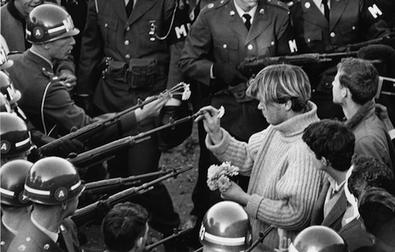
The hippies were also called Flower Children. They advocated for peace and love, art and poetry, spiritual transcendence- usually drug induced- and community.
Sounds good, right?
Remember, anything obtained outside of God is vanity, empty, and vain.
The Summer of Love was an event where over 100,000 hippies converged on Haight-Ashbury neighborhood in San Francisco. These were kids seeking a new way of life, some were drifting runaways, and others just came for the drugs. But they came, did they ever. They wanted to re-structure civilization through peace and love. “To find a new way for humanity” as the gentleman says below. Could they even “restructure society”? For a while, yes, they did. We still feel the effects of that summer today, nearly 60 years later.
Screen shot from PBS’ The American Experience: The Summer of Love
Part of that new way for humanity was the hippies were taught to “question authority” and “turn on, tune in, drop out” by LSD drenched counterculture-man Timothy Leary. Leary was-
“One of the most influential icons in the counterculture movement which formed in the late 1960s out of opposition to the Vietnam War’s escalation, Leary gained influence among much of the youth by advocating the use of LSD as a way of mind expansion and the revelation of personal truth.” (Source).
The truth of it is, the entire movement was demonic. The youth did drop out, of society, of college, from families. They wandered, spiritually and physically, into new realms. Realms of depravity such as experimenting with homosexuality and lesbianism. Realms of mind-altering drugs. Realms of different living situations such as polygamy or ‘free love’ communes.
It’s easy to write off the hippie movement as essentially unserious. Most of them were young; few of them were sober; they said things like “groovy” and “far out.” And in part, the hippies were animated by psychic impulses that weren’t new: the youthful rejection of the apparent mundanity of adulthood, and good old hedonism.
But lurking beneath the shallow motifs – flowers in the hair, acid [LSD] on the tongue – was a serious philosophical protest. “At the deepest level,” writes W. J. Rorabaugh, in one of the few good histories of the movement, the hippies expressed “a crisis of belief.”
Source above, essay “The Terrible Optimism of the Hippies” published in The Independent (UK) 2019.
The Preacher in Ecclesiastes teaches us something about the pointless search for meaning and a satisfying lifestyle that are apart from God.
Further, in W. J. Rorabaugh’s retrospective book, American Hippies (Cambridge Essential Histories) we read of the,
“massive upheavals of the 1960s, which included civil rights, Black Power, feminism, and gay liberation, as well as looser sexual mores, the end of censorship, street protests, political radicalism, and environmentalism. Collectively, these movements profoundly changed the United States. Second, the hippie counterculture was large. Hundreds of thousands of young Americans were, at least for a time, hippies, and millions adopted some if not all hippie beliefs and practices. The numbers mattered. Third, hippie values represented a generational break with traditional middle-class culture. When hordes of people concentrated in a single youth generation simultaneously adopted new thoughts and behaviors, mainstream culture was forced to pay attention. In the long run, hippies played a significant role in transforming American society.”
A LOT was going on in the 1960s! That ‘Summer of Love’ was a startling and visible opening to this upheaval. A crisis of belief. A yearning for something missing from American life. A seeking of a new way.
Don’t all of those reflect back to Ecclesiastes? King Solomon wrote of the yearning of the human heart and its vain seeking, apart from God. God defines love. Disaffected youths do not define love.
What is love? The hippies thought they had unlocked the secret to spiritual fulfillment. They believed, with the help of LSD and mushrooms, that they could access the transcendent divine, and become one with the universe, in love. Many turned to Eastern religions and their music sounded forth with flutes and zithers.
However, God defined love through His word. His is the only and the final word on the subject. The hippies, mainly middle-class white Americans, really did have it good. Two parent households with a mom and a dad, two car homes with garage, creature comforts, church-going, sexual normalcy, and clean living. Rejecting all that for a mystical union with a drug induced divine was for a time, unrestrained disorder nationwide.
What IS love?
Love is patient, love is kind, it is not jealous; love does not brag, it is not arrogant. It does not act disgracefully, it does not seek its own benefit; it is not provoked, does not keep an account of a wrong suffered, it does not rejoice in unrighteousness, but rejoices with the truth; it keeps every confidence, it believes all things, hopes all things, endures all things. Love never fails; … But now faith, hope, and love remain, these three; but the greatest of these is love. (1 Corinthians 13: 4-8a, 13).
God is love, and those who love Him know love, for God IS love.
The one who has My commandments and keeps them is the one who loves Me; and the one who loves Me will be loved by My Father, and I will love him and will reveal Myself to him. (John 14:21).
There is no fear in love, but perfect love drives out fear, because fear involves punishment, and the one who fears is not perfected in love. (1 John 4:18).
I can’t overstate the rapidity with which the hippies’ concepts and philosophies changed America for the worse. Sadly, many of the hippies descended into homelessness and drug addiction. Others came up with sexually transmitted diseases and unwanted pregnancies. Others discovered that free love meant their loved one moved on to the next partner without a thought, leaving broken hearts and disillusionment in their wake. Free love, apparently, wasn’t free.
When humans define love it always misses the mark. As is natural with the natural man, the hippie culture descended quickly to depravity and a worship of self. Self-evolution, the divine within, freedom of self-expression, and a self-involved love were at the core, and thus, destined to fail.
The hippies’ counter-culture movement was historically a new approach. Not blind ambition of the Caesar era. Not Machiavellian scheming of the feudal lords. Not evil malevolence of the dictator times. This time, satan tried a gentle naivete that rushed the love culture into the American summer. For a while, it worked.
The Preacher said in Ecclesiastes 12:1a, “Remember also your Creator in the days of your youth,“… and Ecclesiastes 12:13-14,
Only God can change a culture for the good. Let’s conclude with the Preacher’s conclusion-
The conclusion, when everything has been heard, is: fear God and keep His commandments, because this applies to every person. For God will bring every act to judgment, everything which is hidden, whether it is good or evil.
SYNOPSIS: Whoever thought of the phrase “You’re so heavenly minded you’re no earthly good” should be flogged with a wet noodle. While it’s true that we are busy here on earth, we should never be so busy that we fail to persistently contemplate the love and blessedness awaiting us in our heavenly home. Jonathan Edwards knew this.
The dog days of summer are upon us here in the south. High humidity, high temperatures even through the night, the air thick with wetness and bugs.
According to Farmer’s Almanac, the dog days officially begin July 3 to August 11, but the publisher is a Mainer so…I hereby testify that the dog days are upon us in June! Dog days actually doesn’t originate from anything about a dog. Sirius is the brightest star in the night sky and is named Sirius. It’s the eye in the constellation Canis Major, Greater Dog so Sirius is known as the Dog Star. The ancients used to believe when Sirius was in a certain summer position that it caused heat and drought.
Since it’s summer and summer to me means BEACH, here are some beach pics from north to south along the eastern seaboard.
Lubec Beach, easternmost in the US. EPrata photo
I’ve rounded up sme articles for you. I hope you enjoy them, or at least one!
I’ve been writing about digital life, AI, and algorithms lately. A friend sent me this essay about digital life and the Christian. it’s at a prophecy news type site but it’s a good article absent any woo-woo or fringe stuff.
The author proposes the following question: Unlike a pastor who prayerfully prepares a message or a teacher who intentionally builds a lesson, algorithms are designed around a different objective. Their purpose is not spiritual maturity. Their purpose is attention. They are designed to learn what captures us, what keeps us watching, and what prevents us from moving on to something else. That reality raises an important question for Christians: If something is constantly shaping our thoughts, then who (or what) is teaching our minds?
Sometimes as Christians we must confront a brother or a sister if they are sinning, or raise a difficult subject with a non-Christian. We are reminded always to ‘speak the truth in love’, a phrase from the verse at Ephesians 4:15. Here is ACBC counselor Susan Heck on the topic, and drills down to specifics, like ‘What is Speaking the Truth in Love?’, explains how to do it, why we must, and why we often don’t.
And on that note, sometimes we must admit that when we engage in difficult conversations with folks, we drift toward the judgmental but hide behind an excuse of discernment. And we know that discernment often comes with it those difficult conversations. Treading that balance of speaking truth but in love without judgment is hard to do. Here is Eric Bancroft at TableTalk Magazine with a discussion about the difference. He said, “Judgmentalism is concerned about truth regardless of people. Discernment is concerned about truth because of people.”
I plopped this Reformation Heritage Books link in my draft here a month ago and the book is already out of stock! 15 copies are available at Amazon. It’s a republishing of the 1853 book. The blurb says, “John Angell James, through biblical exposition and character sketches of women from the Bible, shows the benefits of growing in piety as a goal for women from youth through motherhood. Young women are offered biblical and practical advice in order to fulfill the high calling of being a Proverbs 31 woman.”
Here is the outline-
The Influence of Christianity on the Condition of Woman
The Conspicuous Place which Woman Occupies in Holy Scripture
Woman’s Mission
Early Piety
Religious Zeal
The Parental Home
Life Away from Home
Character of Rebekah
The Ornaments of a Profession of Religion
The Characters of Mary and Martha of Bethany
To Young Mothers
The Beautiful Picture of a Good Wife in the Book of Proverbs
Here, Pastor Gabe Hughes, the voice of WWUTT.com (When We Understand the Text) posted a 1 minute reel explaining the Karmelo Anthony verdict from a biblical perspective. His wise words should be heard. His reel is here (on Facebook).
On Youtube, another good video lesson from Gabe Hughes, this time, on why the Holy Spirit will never ‘call’ a women into the pastorate. 26 minutes.
It’s summer, and many families go camping. In the US we say camper, in the UK it’s caravan, but either way, many families have fond memories of camping in one during the warmer months. Here is an article from Apartment Therapy on a family’s re-do of a 1970s camper. Cool before and after photos.
Here is an article from UK’s magazine Country Life about the egalitarian-ness (is that a word?) of coffee houses. Anyone with a penny could enter, and discuss issues of the day, philosophy, ideas, or converse with anyone else at communal tables, regardless of class. Benjamin Franklin transported this idea into the US as well, forming the Junto Club where men could exchange ideas and discuss concepts. Here was also born Franklin’s notion of educating the men by creating a lending library, the first in the new world. The Philadelphia Library Company is still going.
But the fruit of the Spirit is love, joy, peace, patience, kindness, goodness, faithfulness, gentleness, self-control; against such things there is no law. Galatians 5:22-23
kindness here in Greek (xrēstótēs) means a useful kindness, referring to meeting real needs, in God’s way, in His timing (fashion). Hence 5544 (xrēstótēs) is listed as a fruit of the Holy Spirit (Gal 5:22). With the believer, 5544 /xrēstótēs (“divine kindness”) is the Spirit-produced goodness which meets the need and avoids human harshness (cruelty). Strong’s.
Feeling the old pressure of New Year’s dates and Valentine expectations, I contrast restless singleness with hard-won contentment in Christ. Through regret, divorce, and redemption, I urge women to trust God’s appointed season, warning that chasing marriage can hurt more than waiting.
As a teen and young adult, I loved reading historical epics. Follett’s Pillars of the Earth, Mitchell’s Gone with the Wind, Michener’s Hawaii, and of course, Winsor’s Forever Amber.
Forever Amber was written by Kathleen Winsor in 1944. It’s a romance set in Restoration England with historical events as a backdrop, such as the Great Fire of London, the Plague, and the ascension to the throne of King Charles II. It was banned in Boston, but there are no explicit sexual details or graphic scenes, just suggestions, which was enough back then. It is praised for historical accuracy. Amber was a character often likened to Scarlett O’Hara who used her fierce ambition, sensuality, (sexuality, too) to climb to the heights of social standing, acclaim, and wealth.
The book involves Amber pursuing one man, her lifelong love, Bruce, which is unrequited, as his was solely a physical attraction and he viewed Amber as just a mistress, not wife material. It shows Amber’s increasing desperation to reclaim him with a scene near the end of the book of the disappearing dress. As the King’s concubine, Amber had also sensed the King’s interest in her was waning as new court rivals emerged. Knowing Bruce had married a young virgin, Amber decides to capture Bruce and the King’s attention with a unique dress in a desperate attempt to challenge what she believed was her rival and to remain the center of the court’s attention. Amber never accepted that her and Bruce’s relationship was over and had never been substantial to begin with.
Amber is amoral, a literal whore, scheming, and unlikable. So of course at 970 pages the book was a total success. The audio book takes 42 hours.
Wikimedia commons. Scene from the movie
As to the “Naked Dress” scandal: Near the end of the book in a climactic display of her desperate need for attention and status, Amber attends a court ball in a gown made of real pearls. The dress is designed to gradually “fall apart” as the pearls drop off throughout the evening, eventually leaving her virtually naked—a literal and symbolic representation of her willingness to expose everything to reclaim her unrequited love. It didn’t go as planned. After Amber makes her sweeping entrance, all eyes were indeed on her. The men whistled low, with arched eyebrows. The women sneered. Soon the men did too. Amber had gone too far. From the book:
“But aren’t you cold?” interrupted a feminine voice, and turning swiftly Amber found Mrs. Boynton beside her, looking her over with feline insolence.
Another voice, a man’s this time, came from her other side. “Ods-fish, madame. But this is the greatest display that ever I’ve seen in public since I was weaned.” It was the King, lazy, smiling, obviously amused. Amber felt suddenly as if she had been hurt inside.
She turned sick with a feeling of horror and self-disgust. What have I done! she thought. Oh, my goodness, what am I doing out here half undressed?
Her eyes swept round the room and every face she saw was secretly smiling, covertly sneering at her. All at once she felt like the person in a dream who sets out confidently to go up-town stark naked, gets halfway there and then realizes his mistake. And, like the dreamer, she wished passionately that she were back home where no one could see her-but to her wild dismay she realized that this time she was caught in her own trap. She could not wake up from this bad dream. –end quote from the book
At least Amber was ashamed. More on that in a minute.
Display is a good word. Hearing that word, the character of Amber realized what her moral descent had led to, she had descended to displaying the only thing she had left, not character, not wisdom, not gentility, not decorum, but her very flesh.
The 67th Annual Grammy Awards just concluded the other day. I did not watch it. I am out of step with today’s music, and frankly, shocked at the outfits. Or, should I say, lack of them. Literally. One male musician performed in silky boxers only. Some women bared nearly all. Class is out of style. Don’t go looking for the costumes worn at this event, they are un-edifying to pass before your eyes.
The Grammy event showed a lot of displays. If one ever wanted to see a stark realization of where this society is on the moral-immorality scale, this event is it. Lots and lots of ‘Ambers’ parading around naked. I mean, naked. Flesh displayed for all to see, in desperate attempts at what? To retain attention? To prop up one’s mistaken notion of empowerment? To bolster self-esteem? It is disgusting and a reminder that modesty is God’s command. Worse, there was barely a murmur from the press about the licentiousness. If ever there was a society that needed to look at where their immorality has descended to, this is it.
I am truly amazed to see where we are now compared to when I was young. I remember when ‘short shorts’ AKA hot pants were controversial. In 1970 they came into fashion, but a few years later extremely short hot pants had become shorthand for prostitution, particularly underage prostitution.
“Asked in 1971 to explain the popularity of hot pants, a male psychiatrist based in Manhattan borrowed language from the contemporary women’s liberation movement to suggest that they were “an expression of the female’s new freedom.” ~Girl Culture [2 volumes]: An Encyclopedia by by Claudia Mitchell (Editor), Jacqueline Reid-Walsh.
The world’s version of ‘freedom’ for women is parading around in flesh. God’s version of freedom is His eternal gift of freedom from the slavery of sin, which nakedness is one of those sins.
Empowered women do not shamelessly dangle their flesh in front of a global audience. Empowered women are powered by the Holy Spirit, on whom she relies. Her meek spirit, her gentle wisdom, her steady encouragements of her husband and children are entirely the attraction. Flesh is flesh. It will wither and die. The lasting contribution of a woman is not her paraded nakedness, but her modesty in apparel and her modest attitude.
I truly feel terrible for those women (and man) who came to a global event to celebrate music, creativity, and showmanship wearing their flesh as the display. God made humans in His image, and as image bearers they know not what they do when they uncover themselves.
Remember Noah, drunk and naked in his tent? (Genesis 9:20-24). Noah’s son Ham went in, saw his drunken naked father, and in delight, chortling, went out to tell his brothers and show them. What dishonor! To revel in someone else’s shame!
“Woe to you who make your neighbors drink, Who mix in your venom even to make them drunk So as to look on their nakedness!” (Habakkuk 2:15 LSB).
Ham father of Canaan was cursed for his dishonor. We must not delight in another’s nakedness.
Just as in Forever Amber, Bruce never considered Amber marriage material, she was too willing to use her flesh and display it to anyone who could get her further along in her agenda. Ladies, make sure what you display is what God wants: a meek and quiet spirit, with clothing.
We’ve flowed through the first section of this series, in looking at verses that prophesy Jesus’ coming, His arrival, and His early life.
Starting today, from Day 12-16 we will look at verses that focus on Jesus as The Son. We begin by examining a pivotal verse in the Bible:
~~~~~~~~~~~~~~~~~~~~~~~~~~~~ Further Reading
Ligonier: What does ‘the world’ mean in John 3:16? Understanding how undeserving the world is of God’s love is the key to John 3:16. Only then will we appreciate the unexpected gift that God gives. This point was well made many years ago by the esteemed theologian Benjamin Breckinridge Warfield. In his sermon “God’s Immeasurable Love,” Warfield probes the meaning of the term “world” (Greek kosmos) in John 3:16 in order to plumb the depths of God’s love. What is the meaning of “world” in this passage?
Ligonier: John 3:16 and man’s ability to choose God It is ironic that in the same chapter, indeed in the same context, in which our Lord teaches the utter necessity of rebirth to even see the kingdom, let alone choose it, non-Reformed views find one of their main proof texts to argue that fallen man retains a small island of ability to choose Christ. It is John 3:16: “For God so loved the world that He gave His only begotten Son, that whoever believes in Him should not perish but have everlasting life.” What does this famous verse teach about fallen man’s ability to choose Christ? The answer…
Crosswalk: Why John 3:16 should be more than a slogan For many people John 3:16 reads like a Hallmark card sent from God. In fact, when some Christians speak of the Gospel they use a play on the words of the Hallmark corporate slogan: “God cared enough to send His very best.” But John 3:16 is not a message of sentiment. When God sent His Son into the world, He was not having an emotional response to the tragedy of sin.
Spurgeon: Devotional on John 3:16, His Love, His Gift, His Son This text is a polestar, for it has guided more souls to salvation than any other Scripture. It is among promises what the Great Bear is among constellations. Several words in it shine with peculiar brilliance…
I read Nehemiah 8. It is a short book in the Old Testament, and it is good. Nehemiah was the fellow who supervised the rebuilding of Jerusalem and alongside Prophet Ezra help to purify the Jewish community that had re-gathered there. Nehemiah was governor and Ezra was the priest and the scribe.
The day came when Ezra called all the adults, and all children who could understand, to come and listen to the reading of the Law. They stood and listened. The Levites were there to help them understand what they were hearing. Soon there were tears, weeping, and crushed hearts. They fell on their faces. “For all the people wept, when they heard the words of the Law.” The Jews realized how far they were from God. But Ezra said not to weep, for it was a day of rejoicing. The Festival of Booths was born, and the people celebrated, giving gifts to those who had nothing, and went their way eating and drinking. It is a short chapter. I recommend reading it.
The response of the people was the only proper response but it is one from which we can gather strength and praise our Savior all the more. First, the people listened to the word. Any walk with the Lord should begin with listening, either by reading yourself and listening with your mind and heart, or listening to a pastor. The people were instructed, and that is a good start.
Then they wept. There are a lot of reasons people weep when they read or hear the Word. It is precise, beautiful, true, and convicting. It is a gift delivered once for all to the saints, and it is good for reproof, exhortation, and education. The Word also reminds us how far we are from Him, Him as savior and we as sinners forgiven by His blood and His grace. But the Word also reminds us of how close we can be to Him!
Then the people were glad. He restores us! He hears prayer, he regenerates us in His likeness, and we are glad, going forth in joy to know that we CAN know our Savior personally. They celebrated, and they gave gifts. We should do that as well, always being on the lookout for those who are in need to fill that need. Giving the gift of the Word, or our time, or our love or all three!
Finally, the people went away rejoicing but their response to hearing the Word did not stop there. They DID something. In this case it was to begin the Festival of Booths (Sukkot). The Israelites evidenced an emotional response but the instructors encouraged them to apply the words to a spiritual response, and they did so.
What is your response to hearing the word? Do you remain unaffected? Do you fall on your face? Do you weep? Do you rejoice….but remain inactive? Or does hearing the word motivate you to a response in the world that in turn affects others?
Our joy should be all the greater because not only do we have the word, we have the promise of the Word.
“In the beginning was the Word, and the Word was with God, and the Word was God. He was in the beginning with God. All things were made through Him, and without Him nothing was made that was made. In Him was life, and the life was the light of men. And the light shines in the darkness, and the darkness did not comprehend it.” (John 1:1-5)
May He shine brightly in your heart today. If it has been a few days,…weeks…months since you have really listened to the Word, do it today. In Him is life!