By Elizabeth Prata
SYNOPSIS
This essay examines biblical warnings against dishonest gain and applies them to modern commerce, exposing shrinkflation, deceptive marketing, and exploitative practices. It contrasts false scales in today’s marketplace with God’s call for integrity, honesty, and the hope of a kingdom where people are never treated as merchandise.
I’ve mentioned before the scripture in the King James Version that says false teachers will make merchandise of us. It’s 2 Peter 2:3,
And through covetousness shall they with feigned words make merchandise of you: whose judgment now of a long time lingereth not, and their damnation slumbereth not.
Here it is in the NASB-
and in their greed they will exploit you with false words; their judgment from long ago is not idle, and their destruction is not asleep.
Barnes’ Notes explains what you probably already interpreted:
Make merchandise of you – Treat you not as rational beings but as a bale of goods, or any other article of traffic. That is, they would endeavor to make money out of them, and regard them only as fitted to promote that object.
So many of the false teachers have extra ‘merch’ for sale. Apparently we have become so lazy we don’t even fully utter 3-syllable words any more. Anyway, there are plenty of things to buy- charms, journals, bracelets, jewelry, bookmarks…not that any of those things by themselves are bad. Legitimate ministries do need money to operate and merchandise is sometimes associated with their offerings.
But I knew a salesman once. He bought and sold things for the Catholic Church. When asked what he did for a living, he’d grin and say “Junk for Jesus.”
Outside of the Christian world, the turning customers into ‘bales of goods’ is occurring at an ever-increasing pace. I can give several examples. Here is one I saw on Twitter/X:

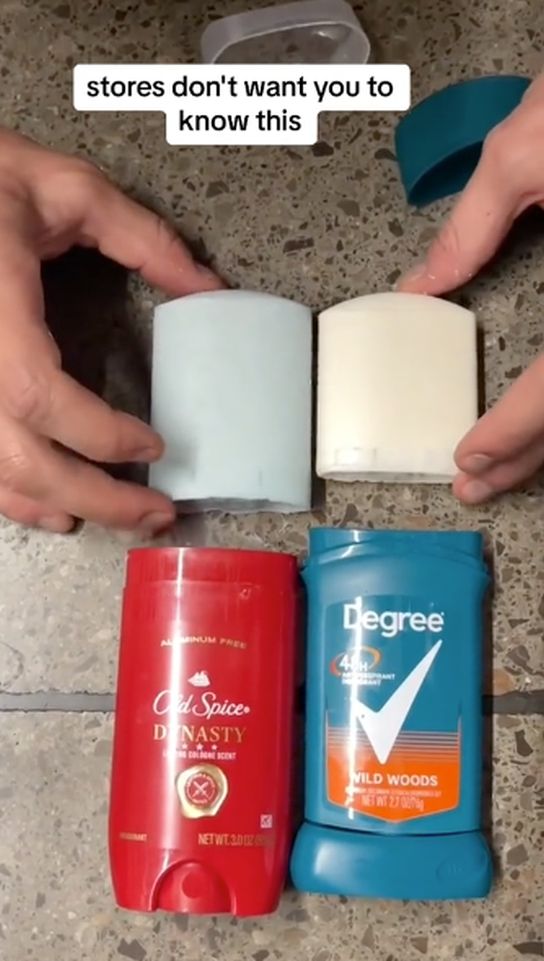
Did you spot the difference? Both canisters look the same size. But at the bottom print noting the amount of product inside, the one on the left is half an ounce smaller than the one on the right. At 2 ounces, the one on the left has been reduced by 25%.
It would not matter so much except that companies do this but keep the price the same, or even increase the price. Either way, you’re paying more for less. This is an economic term called “shrinkflation”.
Now, let’s talk peanut butter. There is a bump at the bottom of the jar known as a “divot”. Over time, that hump has gotten bigger. This is more of the tactic known as shrinkflation. The bump is designed to make a jar look like it holds more than it actually does, without reducing the size of the bottle. It all still looks the same. In the case of Skippy peanut butter, they did this, reducing the amount of product from 18oz to 16.3oz while keeping the retail price the same. It’s sneaky and I don’t like it.
What about deodorant? The container looks tall but what is inside it, isn’t:
Many products that used to be called ice cream are now called “frozen dairy dessert”. Even Breyer’s! Look for a carton labeled actual “ice cream” to be sure you are actually getting ice cream. Frozen dairy desserts have more air and less than the FDA required 10% milk fat. Frozen dairy desserts fall below these standards, containing lower fat different ingredients, or simply, air. While ice cream is made of milk, cream, and sugar, frozen dairy desserts often replace butterfat with vegetable oils instead, such as palm, kernel, or coconut oil. Read the labels and read the ingredients!
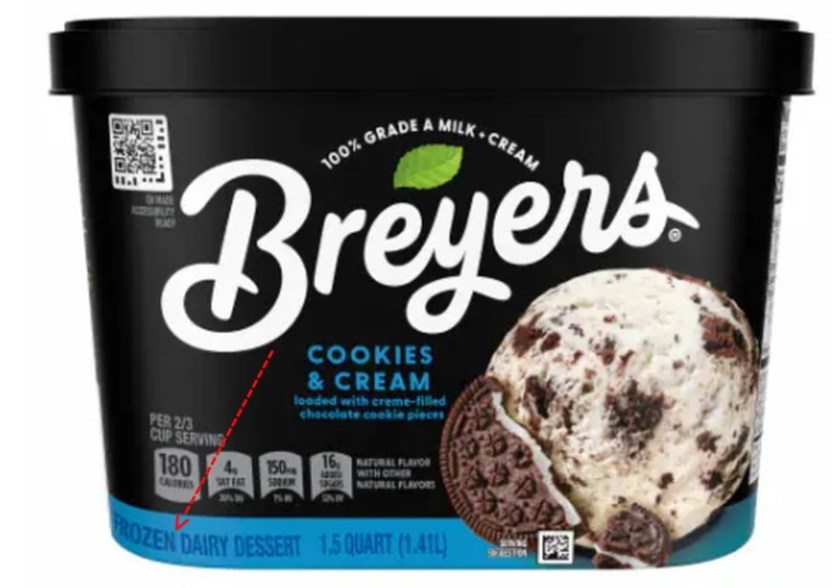
Ingredients list of the above Breyer’s Cookies & Cream:
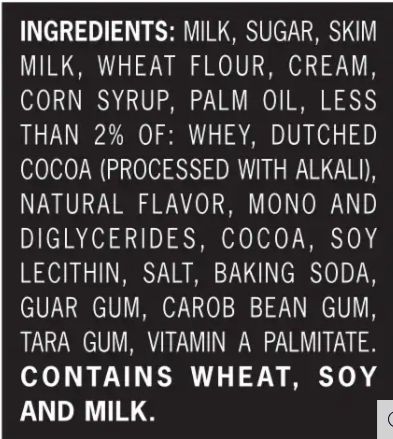
Now look at the label of a different item Breyer’s lists as actual ice cream. This is “Vanilla ice cream”:
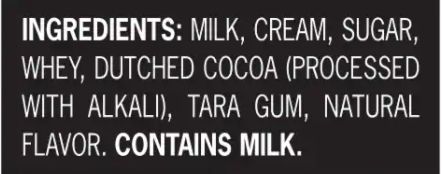
Big difference in the ingredients list!
And let’s not even talk about the rebranding of words that we used to know what they meant. A bag of chips can be called “giant”, “Party Size” but is actually the same old size it always was. The wording is intended to fool us.
Naples, Florida, had a huge farmer’s market. I love a fresh tomato and my companion loved fresh grapefruit. We’d go early because the crowds were big and everyone was after the fresh produce. Since the lines were long the seller used to move quickly, weighing the tomatoes etc and calling out the price. Bug hustle-bustle. I noticed every time he would out his thumb on his scale to make it just that much heavier so he could charge a higher price. Things moved so fast no one else noticed.
I keep thinking, was his integrity worth a dishonest $1? Was his need or want of extra money worth searing his own conscience over? My own Christian integrity is worth much more than a dollar. My very soul was bought with Christ’s blood.
In this new study of pricing by Instacart, titled “Same Cart, Different Price: Instacart’s Price Experiments Cost Families at Checkout” we learn that,
Two shoppers walk into the exact same grocery store, at the exact same time, and pick up the exact same box of Cheerios. Then, they head to the cash register to check out. This sounds like the opening to one of those “three guys walk into a bar” jokes — but there is nothing funny about this punchline.
The first shopper is charged $4.99. She pays and leaves the store with her box of cereal. The second customer steps up to the register and is charged $6.12. He’s ticked and tells the cashier that he, too, should pay $4.99, just like the woman in front of him. His response is understandable. Customers expect to pay the exact same price, for the exact same item, and his experience violates our shared understanding of how pricing for essential products like groceries is supposed to work. But increasingly, this scenario is no longer hypothetical, it’s real. … Fair pricing is no longer a guarantee in the cereal aisle or anywhere else.
I am irritated when this happens and tired of being looked at as a product.
The Lord likes an honest merchant. Proverbs 20:10 says,
Differing weights and differing measures, Both of them are abominable to the LORD.
And this from Proverbs 11:1,
A false balance is abomination to the LORD: but a just weight is his delight.
Of Proverbs 11:1 Matthew Henry has his comment:
“Nothing is more offensive to God than deceit in commerce. A false balance is here put for all manner of unjust and fraudulent practices in dealing with any person, which are all an abomination to the Lord…”
Praise of just weights is found in Proverbs 16:11 and Proverbs 20:10.
Barnes’ Notes on the Bible says,
This emphatic reproduction of the old rule of Deuteronomy 25:13-14 (“You shall not have in your bag differing weights, a large and a small.) is perhaps a trace of the danger of dishonesty incidental to the growing commerce of the Israelites. The stress laid upon the same sin in Proverbs 16:11; Proverbs 20:10; bears witness to the desire of the teacher to educate the youth of Israel to a high standard of integrity, just as the protest of Hosea against it Hosea 12:7 shows the zeal of the prophet in rebuking what was becoming more and more a besetting sin.
Outside of the faith and of course inside the faith, I am personally offended at all this people-merchandising. It aggravates me to see shrinking product weights but rising prices. They think we’re dumb, but we’re not. Or they think we don’t notice. But we do. Increasingly, we are seen as just a dollar figure and they plot to see how much they can get out of us but without the proportional integrity to care for the quality of their product. Nickel and dime-ing us to death.
As I ponder these things, alternatively, I am eager leave the dishonest scales behind and to think of heaven. Heaven, God’s kingdom in the beyond, is a place where there is perfect integrity, perfect scales, total honesty. Each of us will look at each other not as a wallet, but as sisters and brothers only, people made in the likeness of God and saved by His blood. Won’t that be wonderful!

 the-end-time.org