By Elizabeth Prata
Heresy vs false doctrine: What are they? Part 1
Heresy vs false doctrine: What are they? Part 3

I’m often asked discernment questions, which pleases me because that means a woman is thinking about her faith, wants the truth of the Bible, and pursues holiness in her walk. I was recently asked ‘Are false teachers and heretics the same thing, and can they repent? Should we pray for them?’
In the first part, I looked at the question: What is the difference between a false teacher and a heretic? The 3rd part will look at the issue of repentance. CAN a false teacher repent? Can a heretic repent?
Now, in this part 2, let’s look at a definitions of heretic and heresy:
The Heretic is the most prominent and perhaps the most dangerous of the false teachers. … The Heretic is the person who teaches what blatantly contradicts an essential teaching of the Christian faith. ~Tim Challies
And so, heretic is worse than a false teacher: “I think we need to say that there are some absolutely non-negotiable truths that you are false to teach: if you deny the Trinity, if you deny the deity of Christ, if you deny His sinless life and substitutionary death, salvation by grace through faith, the gospel. That’s the drivetrain of truth, saving truth. Those are not negotiable.” ~John MacArthur
The main characteristic of a false teacher was their teaching springs of off the Bible but is twisted or wrong in some way. They might teach about baptism, but baptismal regeneration. They might teach about food, but introduce food laws. They might teach about fasting, but become legalistic in their teaching of this practice. They might teach about prayer, but slide in some Gnostic practices about prayer. And so on.
The main identification of a false teacher is that when their theological error is pointed out, they display an unwillingness to make a correction. Either when the Spirit points out in scripture, or when another person points it out, if the teacher refuses to listen and continues on teaching it, they are a false.

Photo by Priscilla Du Preez 🇨🇦 on Unsplash
As for heretics, their teaching is not even IN the Bible, it is a doctrine of their own making, from their own mind, and is their choice to believe. They have shown they are divisive. (Titus 3:10) The word ‘division’ in the verse means heretical.
HERESY—from a Greek word signifying (1) a choice, (2) the opinion chosen, and (3) the sect holding the opinion. In the Acts of the Apostles (5:17; 15:5; 24:5, 14; 26:5) it denotes a sect, without reference to its character. Elsewhere, however, in the New Testament it has a different meaning attached to it. Paul ranks “heresies” with crimes and seditions (Gal. 5:20). This word also denotes divisions or schisms in the church (1 Cor. 11:19). In Titus 3:10 a “heretical person” is one who follows his own self-willed “questions,” and who is to be avoided. Heresies thus came to signify self-chosen doctrines not emanating from God (2 Pet. 2:1). Source for this definition of heresy- Easton’s Illustrated Bible Dictionary.
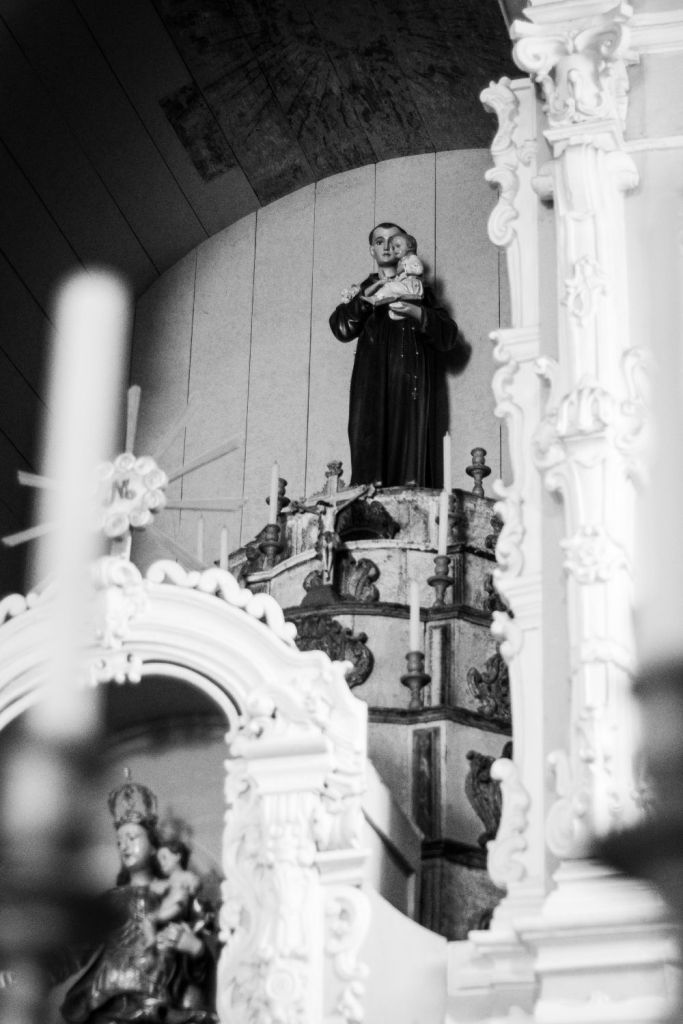
In around 144 AD Marcion taught that the Old Testament should be rejected and that the God of the New Testament was the true God, the OT God being vengeful and false. This heresy is called Marcionism and it’s alive today. Kevin DeYoung wrote a great article about it and noted that some preachers today teach their followers to “unhitch” from the OT and reject it because Jesus is nicer… that old Marcionic heresy.
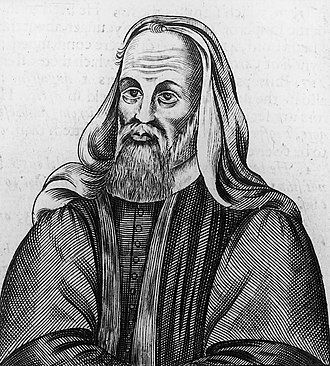
Sadly, thought is is 2023, many of the ancient heresies – which never disappeared – are making a comeback. Another one is Pelagianism, the heretical belief that denies original sin, and promotes that babies are born innocent. Lori Alexander “The Transformed Wife” believes and teaches this, for example. Lori’s mentor and idol, Michael Pearl, is also a Pelagian, teaching this heresy in these modern days.
Sadly, Alexander and Pearl are not the only heretics believing this, this heresy is more common than one may think. Pelagianism is believed by 71% of respondents according to results of the 2022 Ligonier State of Theology survey.
Another heresy that was surprisingly widely held according to the survey is Arianism. This heretical belief states that Jesus is not God. Whether someone says, “Jesus was a good teacher, but not God” or that “Jesus was a created being” (something the Mormons claim) or any statement that denies His divinity, it’s Arianism and a heresy.

In another modern example, TD Jakes is a heretic because he teaches and believes that God is One but is also ONE person, not three persons in one. Jakes says God manifests Himself in different modes. This heresy is called Modalism. This is a concept striking at the heart of the Trinity, and therefore is a heresy.
Challies: “Modalism has long been labeled as a heresy meaning that if you believe it in place of the biblical understanding of the Trinity, you are not and cannot be a true Christian.”
More here by Chris Rosebrough on the heresy of Modalism and modern people who teach it.
Phil Johnson has preached a 6-part series on old heresies that aren’t really old, they are alive and well today. Here is Phil Johnson’s introduction to his series A Survey of Heresies:
“It’s important for Christians to have a grasp of heresies that the church has battled over the centuries, because they often return with new clothing, and the unprepared Christian is likely to fall into these old pits. Phil does an excellent job of looking at some of the major heresies that are revisiting the church today: Socinianism, Arianism, Pelagianism, Gnosticism, and Judaizing. This is an excellent 6 part series that will shore up some weak points in the church today.”
The Judaizers
The Gnostics
The Arians pt1, The Arians pt2
The Pelagians
The Socinians

Heresies are serious. Heresies are alive and well today. They are completely distinct from anything taught in the Bible and are dangerous because they draw the unwary into sinful teachings on the road to apostasy and/or condemnation.
False teachings turn to heresy when they lift off from the Bible and become a doctrine completely separate from anything that can be found in God’s word. You think it might not happen to you, but see how many millions of people believe today in Pelagianism, Modalism, Arianism, Marcionism, Modalism, and so on. There are many warnings in the Bible about not falling for myths.
People believe these dastardly things because there is some kind of sin in them that rears its desire (2 Timothy 4:3) and the sin attaches itself to the false doctrine with tentacles that can only be pried apart by repentance. Heretics would not have an audience unless their followers propped them up. Notice the phrasing in the 2 Tim verse, “accumulated for themselves” these heretics.
It’s one reason we need to stay ‘repented-up’ all the time. Sin desires to have us and it’s not only sinful actions but sinful minds that enjoy false doctrines and heresies.
In the next and final part, we will look at repentance. What it is, whether a false teacher can repent, and whether a heretic can repent.
Heresy vs false doctrine: What are they? Part 1
Heresy vs false doctrine: What are they? Part 3
Sources consulted in researching this essay:
The Bible
John MacArthur Commentary on 2 Timothy 2:24-25
RC Sproul Critical Questions: What is Repentance?
Nathaniel Vincent: Puritan Treasures for Today: Turn and Live
Logos 9 resources such as The International Standard Bible Encyclopaedia, Matthew Henry Full Commentary, etc.

 the-end-time.org
Hello,
I have just read your blog article about false doctrine. I looked at your doctrinal positions as you commented that they mirror a man named John Macarthur, on the website “Grace To You”.
I have read about what you you people call “Eschatology”, i.e. The End Times and Jesus Christ’s return.
I believe you you are being deceived by false doctrine.
Jesus Christ returns after The Great Tribulation, and that is final.
I have been sinned against multiple times in Church buildings, and have even had people want me to leave the Church building, for questioning their false doctrine which they call “Theology”.
Why would someone sin against me, and get angry at all things concerning false doctrine about the mark of the beast, the great tribulation, and Jesus Christ’s return?
I don’t do that, I just say the truth.
Here is my “theology” about the mark of the beast. You need to be saved (Born-Again) of course, and you are better of being poor before the mark of the beast happens. Middle-Class Christians do not like that, because most of what Jesus Christ says about “mammon” and wordiness, is apparently something theologians twist or overlook…
The mark of the beast happens before Jesus Christ’s return, and it is an ultimatum of the world’s sin, which attempts to force people to continue buying selling, only if by worship the beast and its image. Who would do a thing like that? People who aren’t written in the Lamb’s book of life, from the foundation of the world.
Christian’s don’t like that either apparently…
Matthew 16:25
King James Version
25 For whosoever will save his life shall lose it: and whosoever will lose his life for my sake shall find it.
Is that too hardcore? No it isn’t.
I have been deceived the moment I came out of the womb by counterfeit Christianity, until the mark of the beast happens, until proven otherwise. Either in my life-time, or if not, so be it, just like Jesus Christ’s return (after the great tribulation).
I am surrounded by homosexual church buildings, homosexual priests, middle-class Church buildings peddling false doctrine (Pre-Trib rapture), the signs of Jesus Christ’s return are here, and they are all sleeping…
The mark of the beast happens (I will say that again) before Jesus Christ returns, and no-one but the Father in Heaven knows when that is. Therefore, everyone who gets angry about talking about it currently in Church buildings (Peddling false doctrine about Pre-Trib rapture) have a problem with their sin, and the world’s sin manipulating them so easily. What does that mean then? Because Jesus Christ & His Disciples were not of the world, all the “Christians” I see around me are entrenched in it. “BUYING AND SELLING”.
Thanks,
David (From Scotland)
LikeLike
Thank you for caring to engage me on the issue of what I believe RE eschatology, which you think is error.
LikeLike