This is a lesson oriented lesson blog entry about how I go deeper from the bible. This morning I posted an essay about the parable of the wheat and the tares. Another word for tares in some translations is weed, and they both refer to darnel.

How did I know it was referring to darnel? I didn’t. But I did notice that in my bible there is a little footnote for verse 25. It led me to the bottom of the page, where the note said “c- 25 Probably darnel, a wheat-like weed.”
Darnel (left) is a weed that’s wheat-like? Hmmm. In going deeper in study, don’t stop there. Find out about darnel. I find it useful to ask questions. “Why darnel? Why not dandelion weed? What is it about darnel that the Spirit decided to use that representation for the weed in the parable, and not another? What does darnel look like?” And so on.
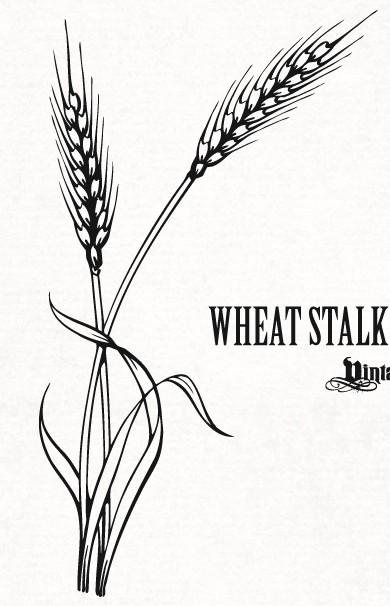
You notice later on in Matthew 13, the disciples went to Jesus and asked questions. They wanted to know the deeper meaning of the parable they’d heard. “Then he left the crowd and went into the house. His disciples came to him and said, “Explain to us the parable of the weeds in the field.” They took the initiative. The Holy Spirit delivers wisdom without reproach to all who ask, according to James 1:5.
I’ve found that having a book on the natural history of Israel is very helpful. Occasionally I check it out from the library. Someday I’d like to buy one for myself to have on hand all the time. I’ve looked up references to the animals, trees, birds, topography, and so on, many times. It always helps deepen my understanding of the Word, and also grounds me in the location.
So in pursuing the information about the qualities about darnel, I go to the Jewish Virtual Encyclopedia, or just Google ‘darnel’, and click on the sites that result in the search list that look credible.
I read a lot about darnel. I learned its agricultural properties and also the history of its use in either sowing an enemy’s field and the legal ramifications and also the medicinal properties of it that cause a poison-like reaction in people who consume it warm.
There are a multitude of parables, metaphors, and examples in the bible that are agriculturally related. America is an industrial society. Without looking deeper into the natural history references and understanding the agriculture, we miss so much. Here are some quick examples:
In Psalm 29:5 where it says “The voice of the LORD breaks the cedars; the LORD breaks in pieces the cedars of Lebanon.” If you know that the cedars of Lebanon are exceptionally tall, straight and strong, (up to 130 ft high and 8 ft in diameter) it deepens the passage to understand that the LORD’S voice is quite powerful indeed to break such a sturdy tree.

The parable of the mustard seed means more when you learn that the seed is the smallest seed but grows the largest bush.
Knowing the topography of the Sermon on the Mount, that it is a natural grassy ampitheatre where the acoustics would have carried Jesus’s voice very far without amplification, is an interesting fact. Modern sound engineers have tested the place and concluded that a crowd of 7,000 would have had no trouble hearing Jesus’s words. According to the website See The Holy Land,
 |
| Salvadora Persica, Mustard tree |
“About 1km northeast of Tabgha is a small bay with exceptional acoustic qualities. Here it is believed Jesus taught the Parable of the Sower (Mark 4:1-9) from a boat moored in the bay. The semicircular bay, at the foot of the Mount of Beatitudes, is one of the most attractive places along the shoreline. It is called Sower’s Cove or the Bay of the Parables. The slope of the hill forms a natural amphitheatre, rather like a Roman theatre. Acoustical research has demonstrated that as many as 7000 people could hear a person speaking from a boat in the bay. Pilgrims who test the acoustics, usually by reading the Gospel account, are amazed at how far the voice carries. This location was also an appropriate setting for the story of the sower and his seeds. There is fertile black earth, rocky ground and plenty of thorns and thistles.”
So to sum up about going deeper:
–ask questions to yourself about the passage, verse, or word. Not to doubt, but to enhance. Ask yourself why this word, what are the qualities of the tree/animal/plant that is being used as an example, etc. Get in the habit of asking questions. If you don’t have time to follow up then, keep a notebook next to your bible and just jot the questions down to look up later. For example, Acts 16:14 describes Lydia as “And a certain woman named Lydia, a seller of purple, of the city of Thyatira…was a worshiper of God” so of course you would ask, “what is a seller of purple?” “What does it mean to be a worshiper of God (it meant something different in those days than it does now).
–Read the cross-references, and the footnotes. If a cross-reference sparks a memory or another verse but you do not have time to follow it up right then, jot it in the notebook- and then really look it up later.
–Use maps to see where the events took place, and note the place names around it. For example it helps to know that the ancient name for Damascus is Rabbah, and Salem is another name for Jerusalem.
–Take time to study the natural history, topography, and agriculture of ancient Israel. Knowing how they winnow, thresh, make olive oil, ferment wine, etc enhances the picture for you. In the Proverbs, there are four inconspicuous animals/insects that are lauded; the ant, the rock badger, the locust (grasshopper), and the spider. It would be fun to compare the real-world behaviors of each to see why the Lord applauds what these animals do.
Just yesterday in studying winnowing, I learned that the threshing-floor David bought from Ornan is atop Mr Moriah where the Temple was…and that it is also the place where Abraham (almost) sacrificed Isaac. Doesn’t it resonate, knowing that the the son of Abraham was almost sacrificed on the spot where the Son of Man actually was sacrificed? And that the threshing floor became the temple which will also be the spot that Jesus lands at the Second Coming?
This short lesson only discusses the agriculture, natural history or topography. Going deeper also involves looking at the original language, the historical context, and always accompanying prayer, among many other methods of going deeper. And at the most basic, just reading the text for what it is, a gift and a pleasure!
What do you do to go deeper into the bible?

 the-end-time.org